Latest updatesNewest first · July to September 2026
Company perspectiveQualiSynth looks at early exploration and the questions that still need real participants. The article frames synthetic interviews as a way to prepare a study and narrow what researchers take into the field.
Company perspectiveThe company describes using synthetic respondents to try out an interview guide before recruitment. Researchers can inspect confusing questions and weak follow-ups while there is still time to revise the study.
ResearchBrox demonstrates how digital twins respond to surveillance, privacy and security questions. The walkthrough compares reactions to described products and examines whether familiar brand names change the modeled answers.
Company perspectiveStravito outlines questions teams can ask when evaluating an AI persona product. Its guide looks beyond the demo to the research foundation, traceability and practical use of the output.
Company perspectiveArticos explains recurring ways the research setting and question design can affect answers. Its guide provides context for teams comparing recruited responses with synthetic research outputs.
Company perspectiveCandor explores workflows that use synthetic research around existing studies. The emphasis is on screening questions and ideas so human research can concentrate on the decisions that need it most.
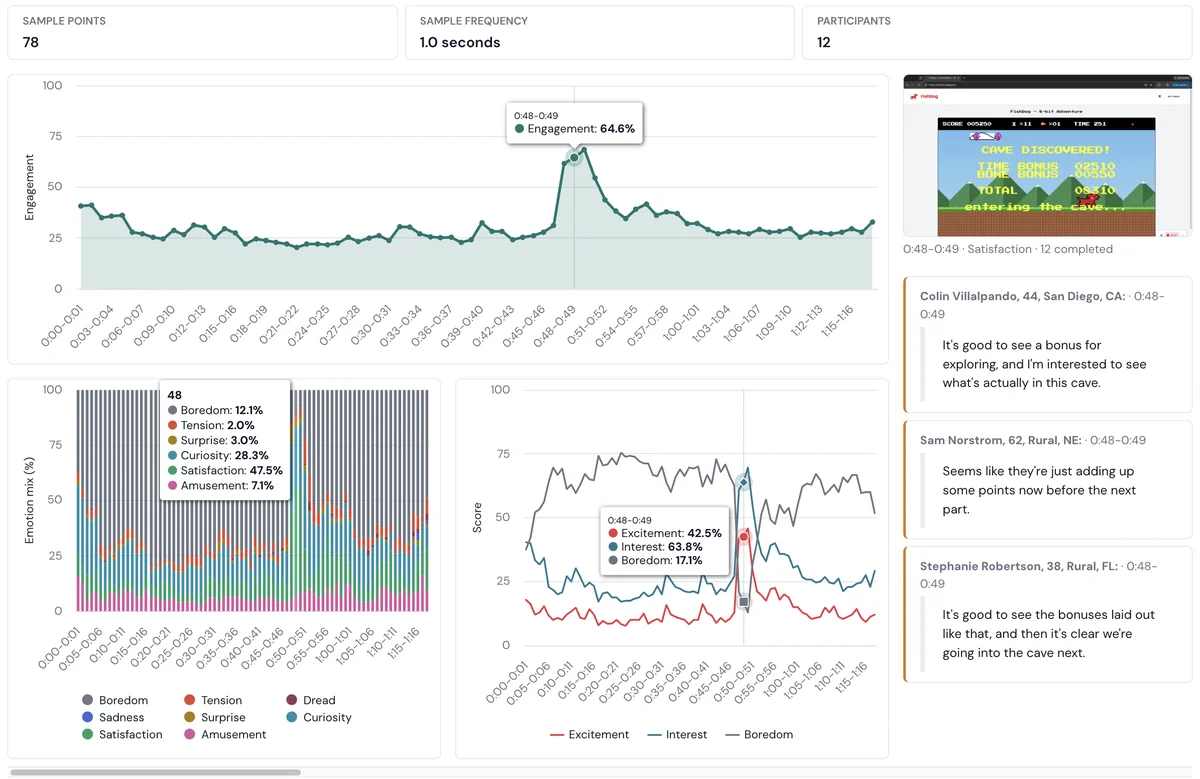
ResearchFishDog describes calibrating its synthetic screening tool with well-known film scenes. The account explains the reference material it chose and how it used audience reactions to inspect the model.
Company perspectivePanoplai shares Adam Bai's appearance on the Greenbook podcast. The conversation covers the company's approach to research and how AI is changing the work of insights teams.
ResearchBrox compares renewal scenarios and alternative letters with a synthetic customer panel. The exercise explores price changes, competing offers and claims experiences as possible influences on modeled retention.
Company perspectiveYabble demonstrates competitor questions through an Australian streaming example. The article shows how teams can use Virtual Audiences to explore alternatives and the reasons behind modeled preferences.
Company perspectiveThis introduction explains what a modeled audience is and how teams can question it. Electric Twin uses product and communication decisions to illustrate the workflow.