A preprint posted on 22 October tests whether AI-generated survey respondents reproduce the combinations of answers people give. Yusuke Kumagae of Hakuhodo DY Holdings and Masahiro Kaneko of MBZUAI tested six language models on 100 questions each from two US datasets: the World Values Survey and the American National Election Studies. Their respondent coverage gap measures how close each human answer profile is to a generated one. Two samples can agree on individual questions while containing different combinations of views. Under the main test settings, all six models performed worse on this measure than a simple comparison method that draws each answer independently from human survey results. A statistical method that also models relationships between questions performed better than the language models across the tested settings. Longer response histories and other changes improved some results, but did not close that gap. The study covers off-the-shelf models and two US social surveys. It does not test every commercial synthetic-research service, specialist training method or prediction of real purchases. The paper is a preprint and has not been peer reviewed.
BioVid announced Mimetics in a release dated 22 October 2026. The offering uses synthetic physician audiences for pharmaceutical message and concept testing, positioning, segmentation and opportunity assessment. BioVid says the models draw on its MindSet Modeling physician surveys and secondary information about clinical practice. Clients can commission studies using mimetic respondents alone or alongside people, use an app to question modeled segments, or tailor models with their own research. Managed fieldwork is described as taking one to two weeks after the required inputs arrive, followed by a report and research-team readout. BioVid reports an 80–90% match between mimetic and human cohorts across content, reasoning and emotion, but the announcement does not give the complete scoring protocol or test datasets. A public study price is not listed. The web page carries a 21 October date, while the release itself is dated 22 October.
Resonate launched Digital Twins on 20 October 2026, offering synthetic consumer research linked to audiences clients can use for advertising. The service lets brands, agencies and campaign teams ask new questions of modeled individuals, then use the results to identify relevant audience groups. Resonate says the models draw on its US Consumer Study, observed behavior and predicted attributes. Its described population of more than 250 million US adults includes modeled information and projections, rather than 250 million people answering each client's questions. The service is available through consultation, with delivery described as taking about five days. The announcement names an agency project with Wpromote x Giant Spoon. Resonate reports a 93% average match with fielded research in its comparisons, but does not provide the complete question set, sample sizes or scoring calculation in the release. The reported result is not an accuracy guarantee for a new study.
CMB announced its Decision Intelligence Suite on 15 October 2026. The suite includes Intelligent Personas, which uses earlier research and customer information to model audience conversations, alongside tools for analytical questions, predictive scenarios and external market monitoring. Its dedicated persona service supports individual and group discussions for concepts, creative work, positioning and strategy. CMB says the personas can be refreshed as new information arrives. The company reports using the suite with Fortune 100 clients, but the announcement does not identify them or provide a numerical evaluation against human research. Access is arranged through CMB, and a public subscription price is not listed. CMB is the trading name of Chadwick Martin Bailey, Inc., an ITA Group subsidiary.
A preprint by Mantas Lukauskas and Viktorija Šarkauskaitė compares 14 decision models and 47 generative language models using a Lithuanian organisational-psychology survey with 263 respondents and 68 questions. The researchers supplied profiles of 100 respondents and compared simulated answers with human responses and statistical baselines. Decision models return probabilities for each answer option. Averaging those probabilities reproduced overall answer distributions better than rounding them into single answers, but relationships between questions were less well preserved. The decision models also predicted individual answers less well than a baseline based on other respondents’ answer frequencies. The study shows why matching survey averages does not establish accurate predictions about individuals. Its findings cover one psychology dataset, rather than consumer buying behaviour, and comparisons with a second human sample were too noisy to rank models reliably against people. The paper was submitted on 10 October and has not been peer reviewed. Code and raw model outputs are available from the authors on request.
A preprint by Augusto Gonzalez-Bonorino, Kseniia Biriukova and Monica Capra examines whether country-level survey information can guide synthetic responses. The authors trained Llama 3.1 models using six Global Preferences Survey measures, including trust and attitudes to risk, then tested answers to World Values Survey questions across 16 selected countries. The models learned the supplied synthetic comparisons and retained a broad trust signal when the question wording changed. Agreement with real people's answers remained unresolved, and results differed across the other measures. The study therefore separates learning supplied information from predicting human responses. Its proposed use in screening survey questions still needs a test against an independent human pilot. This is a preprint published on 5 October, not a peer-reviewed validation of synthetic panels.
A preprint by Khashayar Pourtaheri and Ahmad Zareei tests synthetic personas against two survey waves from 845 US adults across 14 behavioral-bias measures. Adding earlier answers improved predictions of individual responses, but the best setup recovered only 28% of the human test-retest informedness benchmark. That measure is not an accuracy percentage. The study includes methods and limitations; its findings cover one model and an older US panel.
Pew Research Center gave AI counterparts of real panel members the same questions used in three 2026 U.S. surveys. With its selected Claude Opus 4.6 setup, the synthetic results differed from human results by an average of 12.4 percentage points per response option across the three waves. The report includes the survey questions, comparison data and methodology. Its findings concern this public-opinion test, not every synthetic research method.
Flynn announced Clarinova’s launch and named itself as the platform’s partner and first user. Flynn says it plans to use Clarinova’s synthetic audiences in client research, brand strategy and creative work. These are company-reported plans and capabilities.
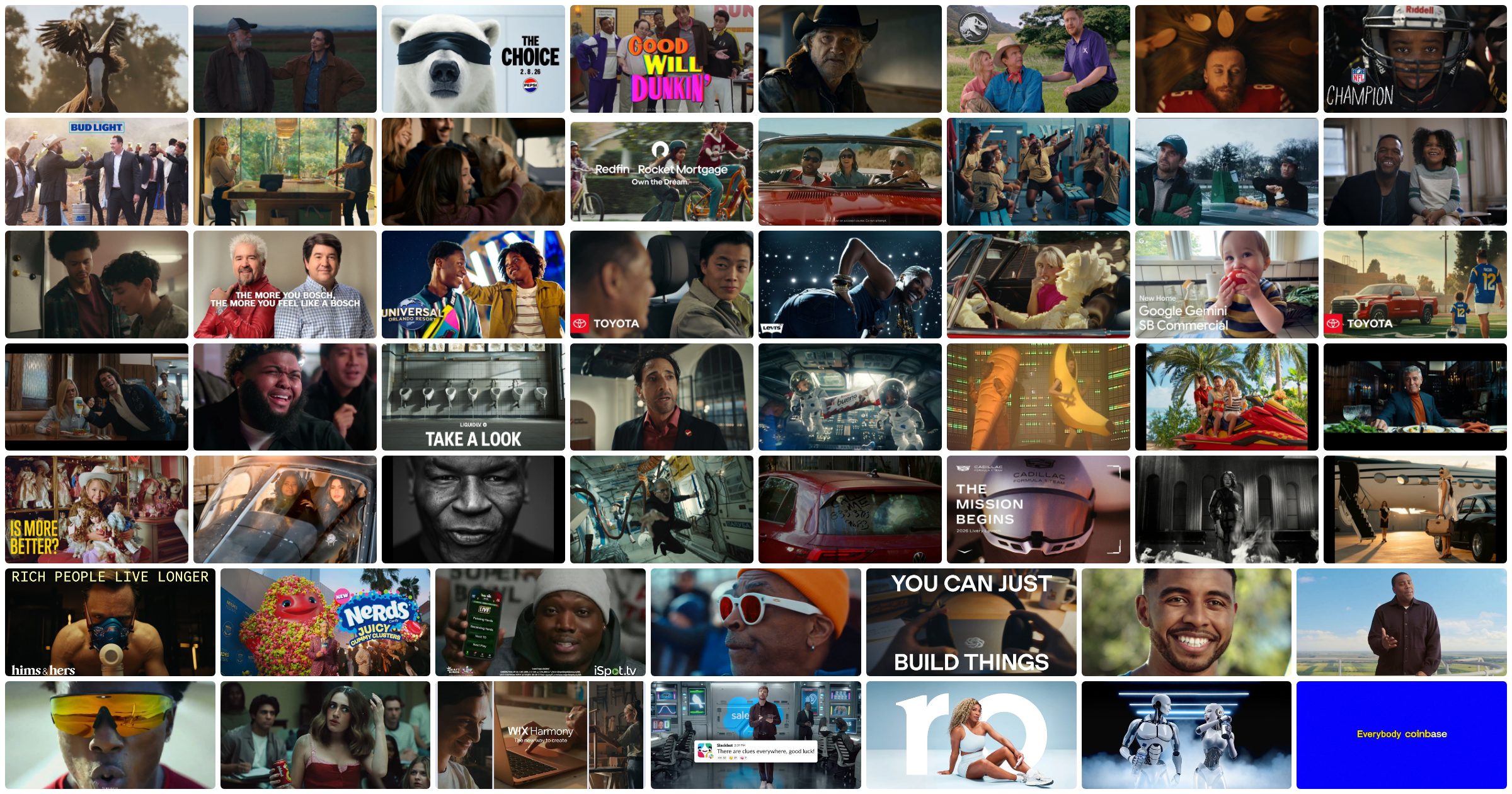
Minds compares ratings from 100 grounded synthetic respondents across 54 Super Bowl LX ads with USA TODAY’s Ad Meter. Minds reports a 0.85 rank correlation and scores about 3.9% too high on average. The study is retrospective, not a blind forecast, and its publisher notes limits to generalization.
Minds compared 300 synthetic SME respondents across six EU countries with Flash Eurobarometer 549, reporting an 87.1% aggregate approximation score. Its study notes the synthetic panel was not random, answered in English, and may have been exposed to the published survey.
Qualtrics has announced its XM Data & AI Platform, with availability planned for 2027. Its experience-simulation capability will use synthetic data and digital twins of customers to explore responses to pricing changes, new offerings and policies.
 Research